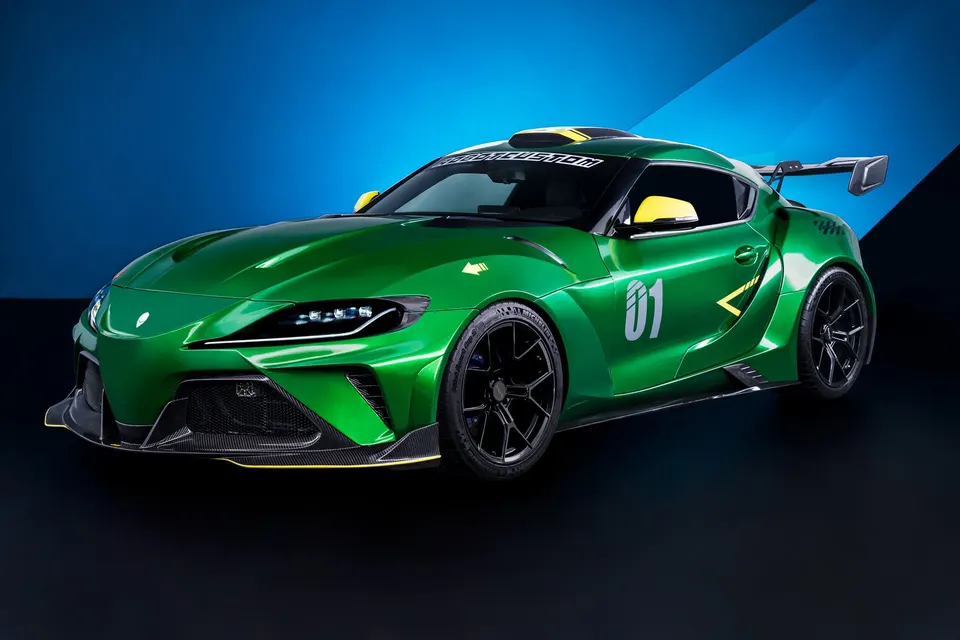
Material choice is the single decision that decides how much your body kit weighs, how much it costs, and how much of the budget disappears at the paint shop. Every KAKAER listing shows the materials that platform is actually available in — sometimes all three, sometimes only one — so the first useful question is not "which is best" but "which is the right compromise for this car".
This guide explains what FRP, wet carbon and prepreg dry carbon each are, what you gain and give up with each, and how those differences show up in the price tables on our product pages.
The short answer
If the car will be painted body colour and lives on the street, FRP gives you the look for the least money and is the easiest material to repair after a kerb. If you want the weave visible and are chasing weight, carbon is the answer, and within carbon the choice is between wet lay-up carbon, which is cheaper and slightly heavier, and prepreg dry carbon, which is the lightest and most consistent option we offer and therefore the most expensive.
| FRP | Wet carbon | Prepreg dry carbon | |
|---|---|---|---|
| What it is | Glass fibre cloth + resin, hand laid | Carbon cloth wetted with resin during lay-up | Carbon cloth pre-impregnated with a measured resin content, heat cured |
| Finish as supplied | Sanded, ready for paint | Clear-coated weave | Clear-coated weave |
| Needs paint | Yes | No, unless you want it body-coloured | No, unless you want it body-coloured |
| Typical position on price | Lowest | Middle | Highest |
| Best suited to | Painted street builds, budgets | Visible weave at a sensible price | Weight-focused and show builds |
Those three rows are the whole decision for most builds. Everything below is the reasoning behind them.

What FRP actually is
FRP means fibre-reinforced plastic; in this industry it almost always means glass fibre mat or cloth saturated with polyester or vinyl ester resin and cured in an open mould. It is the material most of the affordable aftermarket has used for decades, and for good reason.
- It repairs. A cracked or chipped FRP lip can be ground back, re-glassed and filled by any competent body shop, which is why it is the default for daily drivers that meet car parks and speed bumps.
- It takes paint predictably. There is no weave to bleed through and no pinholing to chase, so paint labour is lower than with many carbon parts.
- It is forgiving. FRP flexes more than carbon before it cracks, which matters on long front lips mounted low to the ground.
- It costs less. Typically a fraction of the carbon price for the same part, which is why our full-kit pricing starts where it does.
The trade-off is weight: an FRP panel weighs a figure close to the factory part it replaces, so you should not buy FRP expecting a diet. If you want the car lighter, look at carbon.
Wet carbon: how most carbon parts are made
Wet carbon — often just called "carbon" — uses dry woven carbon cloth that is wetted with resin by hand as it goes into the mould. It is labour-intensive and the result depends heavily on how well the laminator controls resin content. Too much resin and the part gains weight for no strength; too little and you get dry spots that show as dull patches under the clear coat.
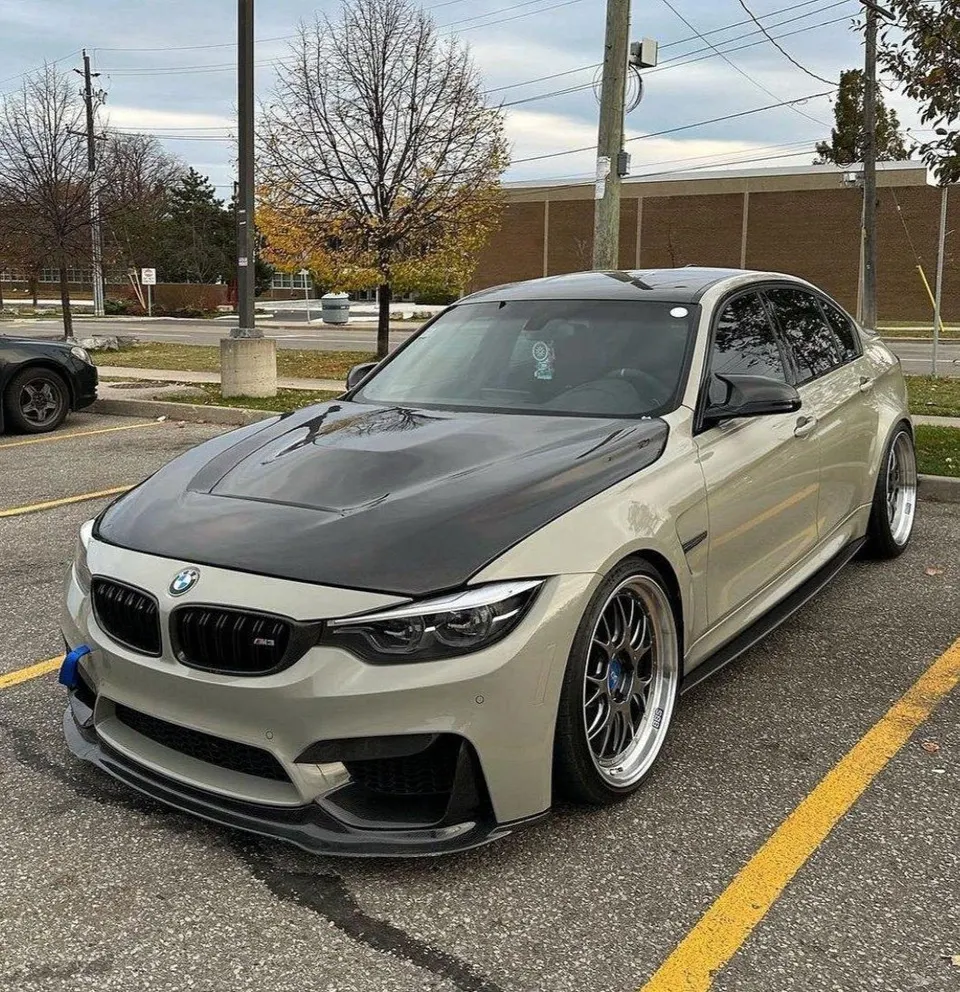
Done properly, wet carbon gives you exactly what most people want from carbon: the look and a meaningful weight saving over FRP. It is the sweet spot for visible-weave parts on a car that still sees regular use.
Dry carbon: prepreg and why it costs more
"Dry" carbon starts as cloth that has already been impregnated with resin at the factory, in a controlled quantity. Nothing is poured on in the mould. The part is then cured under heat — usually in an autoclave or an oven cure — so the resin content stays low and consistent across the panel.
Two things follow from that. First, less excess resin means less dead weight, so a dry carbon part is the lightest version of that part you can buy from us. Second, consistency: because the resin content is fixed before lay-up, panel-to-panel variation in weight and finish is far smaller than it is with hand-wetted cloth. Both of those cost money, in materials and in cure time, which is reflected in the price.
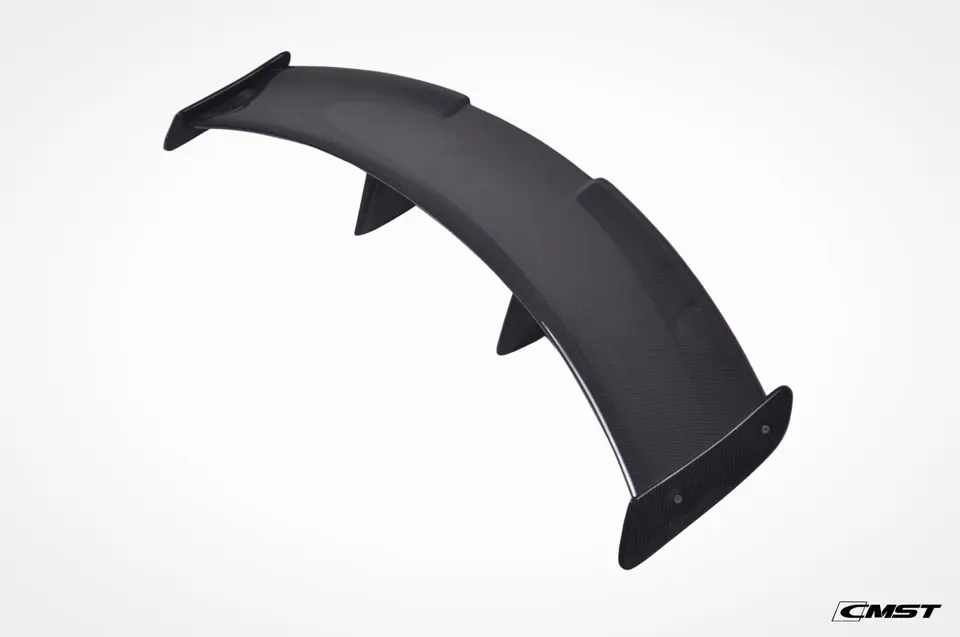
Dry carbon is what to choose when the part is large and mostly seen — hoods, roof panels, big rear wings — or when the build is weight-sensitive enough that a saving of a few kilograms per panel is worth paying for.
Reading the material options on our product pages
Each listing prices per part, and each part row names the material it is available in. Three abbreviations come up repeatedly:
- PCF — partial carbon fibre: an FRP structure carrying carbon accents. It looks like carbon where it matters visually and costs less than full carbon.
- FCF — full carbon fibre: the part is carbon through its whole structure, not a skin over another material.
- Dry carbon — prepreg dry carbon as described above. Where a part is offered in both regular and dry carbon, both prices appear side by side in the table.
The BMW M2 G87 Dry Carbon Aero Kit is a good example of how mixed listings work: the kit itself is dry carbon, while the optional hoods are listed separately in a different construction, because not everybody wants to pay hood money to get the lip they came for.
Finish: painted or visible weave
Material choice and finish are linked but not identical. FRP arrives sanded and ready for primer — it must be painted, because glass fibre left bare will not hold up to weather. Carbon can stay visible under its clear coat, but nothing stops you painting it if you want the panels body-coloured.
If you plan to paint carbon, tell us when ordering: painted panels do not need the same cosmetic standard underneath, and it saves you paying for a finish you are going to cover. Which parts ship in gloss, matte or another finish depends on the part itself, so ask for the finish you want when you order and we will confirm what it ships in.
Strength, damage and repairability
Carbon has a higher strength-to-weight ratio than glass fibre, which is not the same thing as being indestructible. Under a sharp impact carbon tends to crack or delaminate, while FRP flexes and often survives. Repair economics run the other way: FRP is cheap and quick to fix anywhere, whereas a damaged carbon panel needs someone who understands composite repair, and matching the weave on a partial repair is rarely invisible.
Practically, that argues for FRP on the parts most likely to get hit — front lips, side skirts, low diffusers — and for carbon on the parts nobody touches: hoods, roofs, wings, mirror covers, interior and engine bay trim.
Which material should you choose?
- Painted street car, watching budget — FRP everywhere. Put the savings into paint quality and suspension instead.
- Visible weave, occasional weekend car — wet carbon on the pieces you see, FRP underneath where nobody looks.
- Show car or track car where weight matters — prepreg dry carbon on the large panels, which is where the kilograms actually are.
- Carbon look on a budget — PCF parts give the appearance where it counts without full-carbon pricing.
Whichever you pick, fit every panel before anything goes to paint, whatever the material. A dry-fit day is far cheaper than a repaint.
Related kits worth comparing
These listings carry more than one material option for the same parts, so you can see the price difference directly:
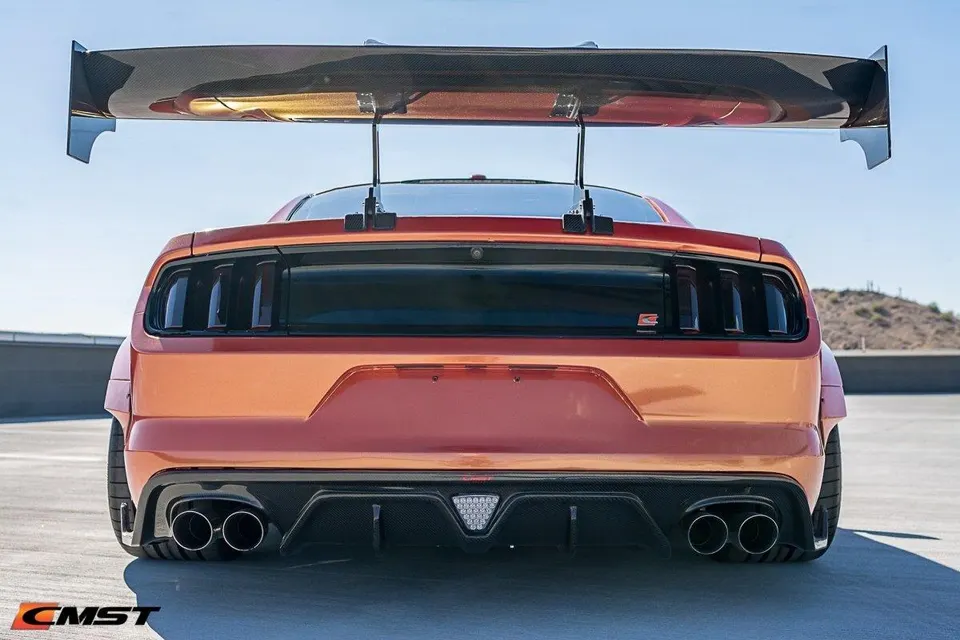
Ford Mustang S550 (2015-2017) Aero Kit (OEM Body)
Ford Mustang S550 (2015-2017)
FRP $2,083 / Carbon $3,214


BMW M4 G82 (2021+) Widebody Kit
BMW M4 G82 (2021+)
Carbon $8,484


Porsche 911 (992) GT3 Style Kit
Porsche 911 (992) (2019-)
Parts from $675

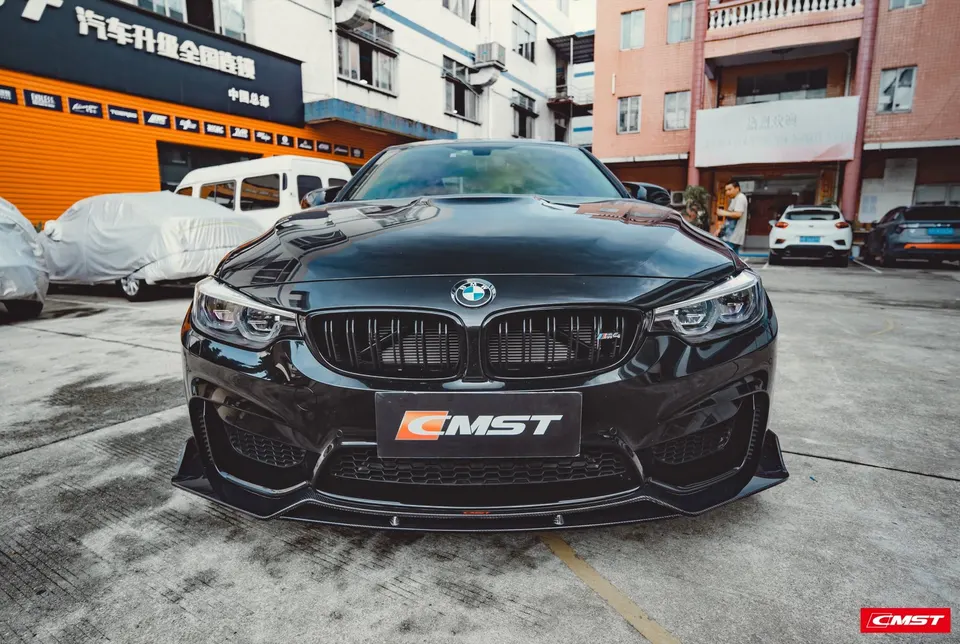
BMW M3 / M4 F80/F82 Carbon aero kit
BMW M3 / M4 F80/F82 (2014-2020)
Carbon $2,479