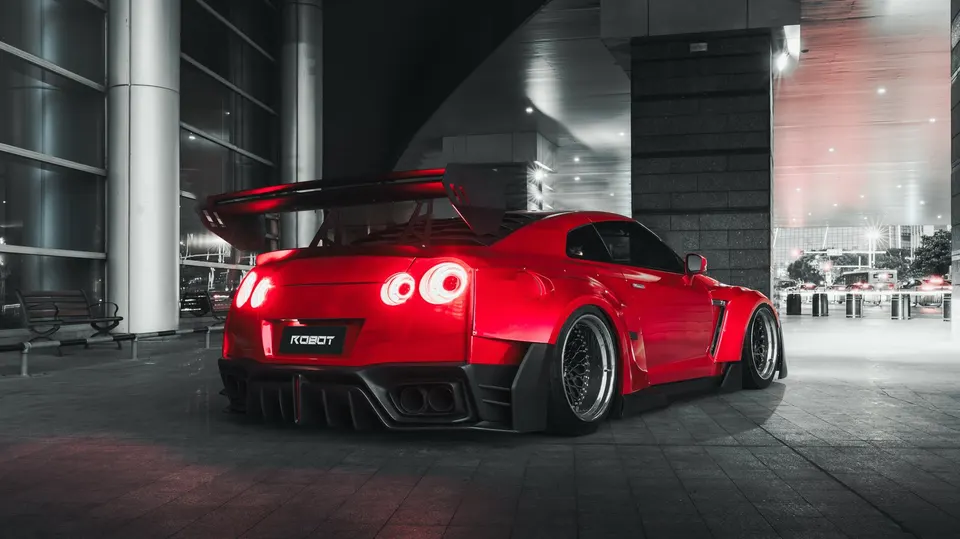
Importing a body kit is mostly a logistics exercise. The parts themselves are simple; getting ten large, light, fragile panels across an ocean without damage, without surprise duties and without a three-week wait at a port is the part that needs planning.
This guide covers what actually decides cost and risk: freight method, volumetric weight, packaging standards, customs paperwork and how to behave when something arrives broken. Anything that depends on our own rates or on your destination rather than on general practice is quoted with your order rather than guessed here.
1. Choose the freight method by shipment size, not by speed
| Method | Best for | Transit | Watch out for |
|---|---|---|---|
| Sea freight (LCL / FCL) | Full kits, widebody conversions, dealer restocks — anything bulky | Quoted per order; set by routing and sailing schedule to your port | You or your forwarder handle customs and collection at your end |
| Air freight | Complete kits and medium-sized consignments where someone is waiting | Quoted per order; set by routing and flight availability to your airport | Charged on chargeable weight; heavy crates get expensive quickly |
| Express courier | Small individual parts: lips, spoilers, diffusers, mirror covers | Quoted per order; door to door, counted in days rather than weeks | Volumetric cost on large panels can exceed air freight |
The counter-intuitive part: the smaller and lighter the shipment, the more sense courier makes, and once the crate gets large, air freight usually beats courier on price even though it is slower. Anything bulky where nobody is in a hurry belongs on a boat.
2. Understand volumetric weight before quoting anything
Freight is charged on whichever is greater: actual weight or volumetric weight. Volumetric weight exists because a pallet of body panels fills an aircraft hold while weighing very little. You calculate it by multiplying the packed dimensions and dividing by the carrier's divisor.
What that means practically:
- A hood in a generously sized box can cost more to ship than a denser, heavier part
- Stripping excess packaging off a part before shipping can genuinely reduce cost — as long as protection is not lost
- Consolidating one big order is almost always cheaper per part than three small ones
This is why we quote shipping per order rather than publishing a rate card: the answer depends entirely on what is in the box and where it is going.

3. Packaging: what to insist on
Composite panels fail at the edges. Corners, flanges and mounting tabs take the knocks, and damage there is usually a written-off part rather than a repairable one. Whatever supplier you use, these are the requirements worth holding them to:
- Every part individually wrapped, with dedicated protection on edges and corners rather than only on faces
- No panel touching another panel inside the carton
- Carton specification confirmed in writing before dispatch, including dedicated edge protection
- Crating for sea freight and for full-kit shipments, with export-treated timber agreed before booking
- Shipment photographs before dispatch — ask for them; every serious exporter takes them
We wrap each part individually and add dedicated edge protection before packing, then crate or palletise depending on how the shipment travels. Ask for the pre-dispatch photos; they are the cheapest insurance involved.
4. Customs paperwork: who does what
Duty and import taxes are set by your country and are paid by the importer — no supplier can price those for you. What your supplier controls is the documentation that gets the shipment through clearance.
- Commercial invoice and packing list issued with every shipment
- Export declaration on our side, plus certificates of origin where the destination requires them
- The commodity classification filed for composite body parts, stated on the invoice so your broker can pre-clear it
- The Incoterm being quoted and who acts as importer of record under it, written on the proforma invoice
Ask any supplier which Incoterm they are quoting before comparing prices. The same kit quoted EXW and quoted DDP are not the same number — one of them includes freight, insurance and clearance, and the other does not.
For anything above a single pallet, a freight forwarder or customs broker at your end earns their fee. They will also tell you whether your country applies anti-dumping or additional duties to automotive parts, which changes the landed cost meaningfully.
5. When something arrives damaged
Damage during transit is uncommon but not rare, and it is resolved on evidence gathered in the first hour, not the first week.
- Inspect every carton before signing. Note damage on the delivery receipt itself, not afterwards by email
- Photograph the outer packaging before opening it
- Photograph the damaged part still inside its packaging
- Send photos, order reference and carrier receipt inside the carrier's claim window — confirm it for your lane when you order
- Get the replacement sorted in parallel with the carrier claim rather than waiting for its outcome
Do this in that order. A claim without a delivery-receipt note is much harder to win, and once a part has been unpacked and moved, nobody can prove where the damage happened.
6. Plan the timeline backwards
Body panels are made to order rather than picked from stock, so the clock you should be counting has several stages: production time, packing, export handling, transit, customs clearance and final delivery to the shop. Only one of those stages is transit, which is why asking "how long is shipping" gives a misleading answer to "when can I start the build".
Plan backwards from the date the car needs to be on the road, add a buffer for customs, and place the order before you book paint. Waiting parts are the most expensive thing in a body shop.

7. What to send us for a quote
- Product or products you want, including material choice where there is one
- Destination city and port or airport preference if you have one
- Whether you have a forwarder or need door-to-door delivery
- Any deadline worth knowing about
We will come back with the parts price, the shipping options for that order and the documents we issue, so you can compare landed cost rather than guessing at it. Start from our shipping and returns page, which sets out each freight method and what we handle.