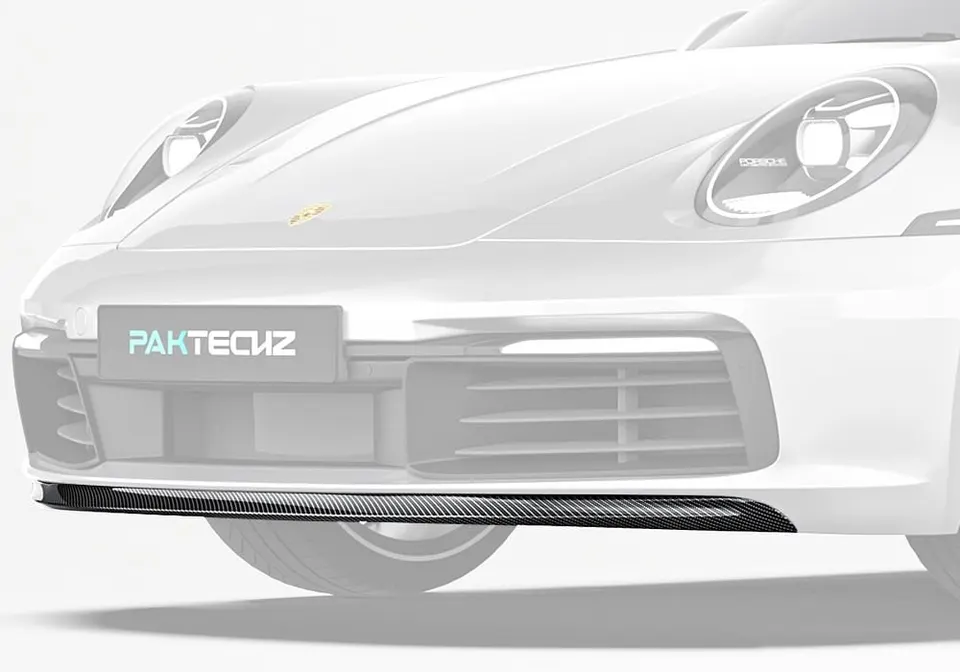
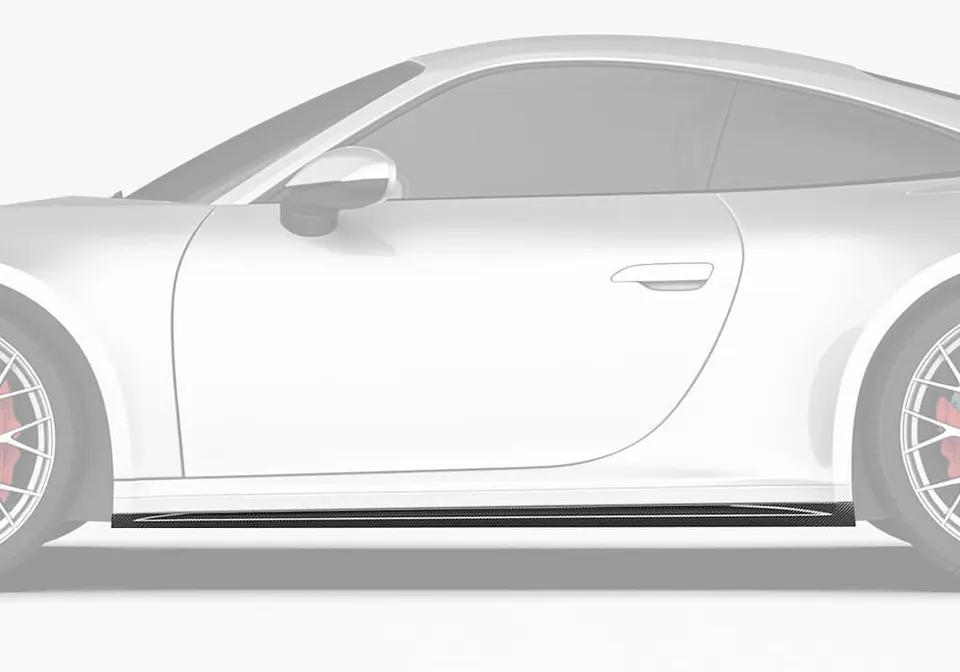
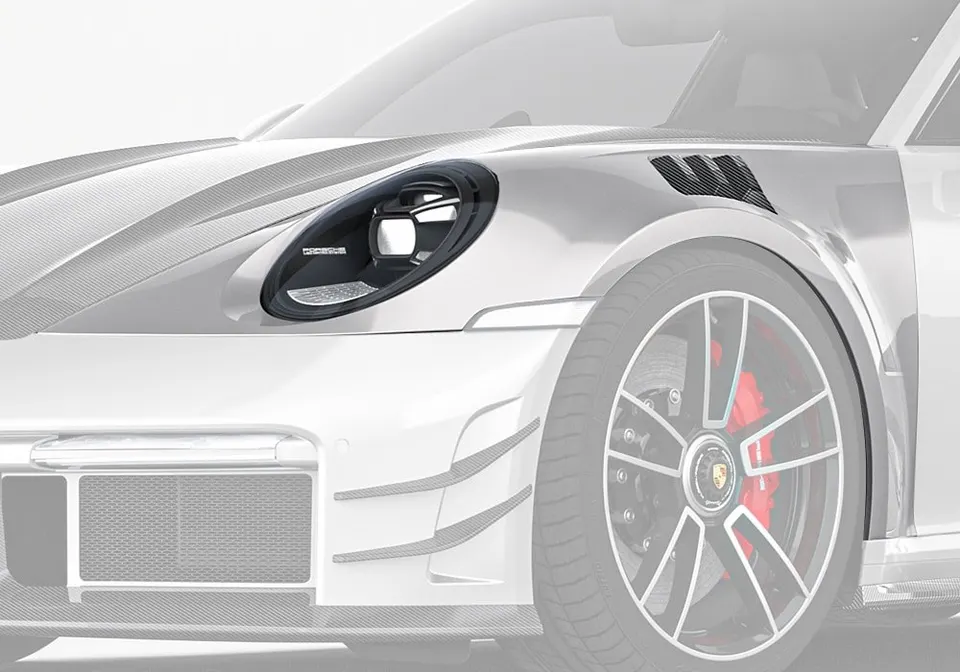
The 992 is the 911 generation that punishes vague ordering. On paper it is one car; in practice there is a pre- and post-2024 split, standard versus sport body, coupé versus convertible, and a Turbo S body that shares almost nothing visually with a Carrera. Order against the wrong one and the parts will not fit, which is why this guide starts with identification rather than styling.
Below is every 992 route in the KAKAER catalog, what each one changes, and precisely which car each is built for.
Step one: identify your 992 precisely
- Generation. 992.1 covers 2019-2024, 992.2 is 2025-onward. Several parts changed between them, so the listings are separate.
- Body. Standard body versus the sport design body; front lips and diffusers differ between them.
- Roof. Coupé or convertible — the convertible cannot take every rear wing in the range.
- Trim level. Carrera, S, GTS and Turbo S each have their own bumper shapes. Turbo S in particular is covered by its own listing.
Two minutes with your VIN and a photograph of the front bumper will settle all four. Send both before ordering and we will confirm what fits.
The four routes in our 992 catalog
| Route | What it changes | Built for |
|---|---|---|
| Add-on aero kit | Nine pieces including front lip, side skirts, rear diffuser and rear wings; core kit is four pieces, the rest are optional | 992 (2019-), standard and sport models |
| GT3 style kit | Front bumper, front lip, rear bumper, rear diffuser and a seven-piece rear wing | 992 (2019-), GT3 styling |
| Sport dry carbon low-line kit | Eight pieces including two rear wing designs and two hood designs | 992 Carrera sport version (2019+) |
| Per-part dry carbon ranges | Separately priced parts by generation including 992.1, 992.2 and Turbo S | Each range matches one variant |
Route one: the add-on aero kit
Porsche 911 (992) Add-on aero kit is the entry route and the one most owners start with. Its nine pieces split into a four-piece core kit — the parts that visually define a modified 992 — and five optional pieces for owners who want to go further.


Porsche 911 (992) Add-on aero kit
Porsche 911 (992) (2019-)
Carbon $3,286
Porsche 911 (992) Sport Dry Carbon low-line kit
Porsche 911 (992) Carrera sport version (2019+)
Parts from $743
Because the pieces are add-on rather than replacement, they mount using the factory bumper and sill hardware, so installation is bolt-on work with no bodyshell modification. Two notes worth reading carefully on this listing: the rear wing is specified not for convertible, and the front lip and rear diffuser exist in both sport and standard versions — the parts are shaped differently for each body.
Route two: the GT3 style kit
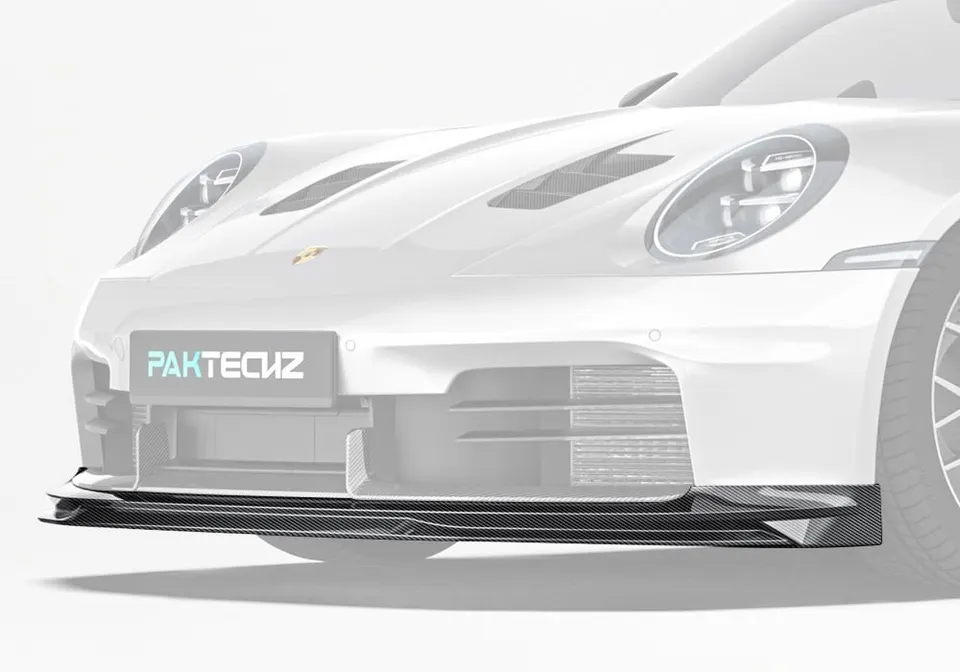
Porsche 911 (992) GT3 Style Kit is the most transformative option short of a full conversion: you replace the front bumper, add a three-piece front lip, replace the rear bumper and diffuser, and top it with a seven-piece rear wing. Compared with the add-on route this is a bigger installation job — bumper replacement rather than bolt-on accessories — but it is still a reversible panel swap and it is what turns a Carrera silhouette into a GT3 silhouette.
This is one of the few 992 listings offering a material choice across the range, so it is worth comparing constructions in our material guide before deciding what to order in carbon and what to have painted.

Route three: the Carrera sport dry carbon package
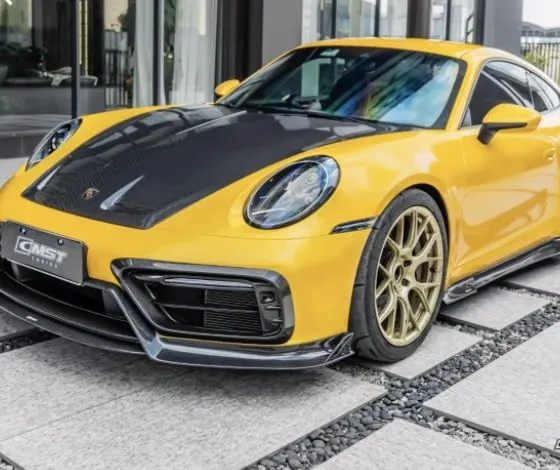
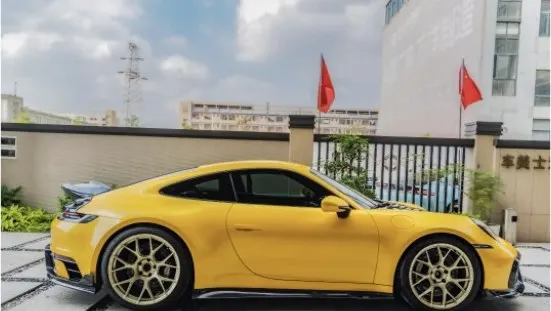
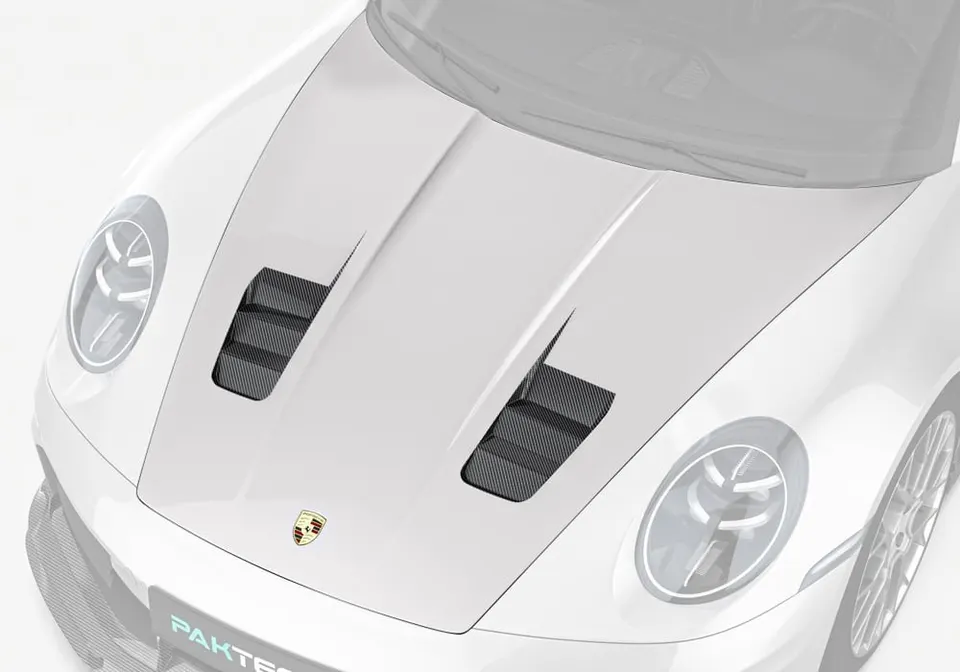
Porsche 911 (992) Sport Dry Carbon low-line kit is built specifically for the Carrera sport version (2019+) and is entirely prepreg dry carbon. Alongside the usual lip, diffuser and side skirts it includes two rear wing designs — including a ducktail — and two hood designs plus front bumper vents.
Being dry carbon throughout, this is the route for owners who care most about weight and finish consistency, and specifically for the sport-bodied car. It is priced per part, so it is realistic to take the ducktail and diffuser now and the hood later.
Route four: generation-specific part ranges
Precise parts are listed by variant, because this is where differences actually bite:
- 992.1 (2019-2024) — Porsche 911 992.1 (2019-2024) Prepreg Dry Carbon Parts lists seven pieces including two rear spoiler designs, sport design versions of the spoiler and diffuser, and mirror covers.
- 992.2 (2025+) — Porsche 911 992.2 (2025+) Prepreg Dry Carbon Parts lists eleven pieces including the hood and engine lid alongside the usual front and rear aero, reflecting the revised body.
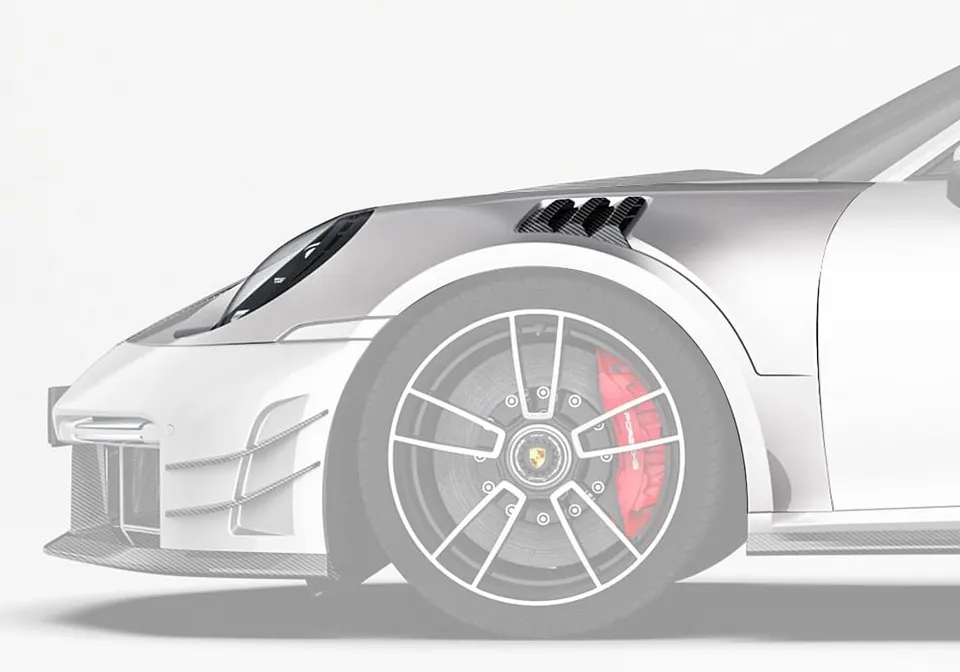
- 992 Turbo S (2020-2024) — Porsche 911 992 Turbo S (2020-2024) Prepreg Dry Carbon Parts covers the Turbo S fender, which is specific to that body.
Everything in these three ranges is prepreg dry carbon except the Turbo S fender, which is also offered in PCF — an FRP structure with carbon accents — for owners who want the look at a lower price.
Combining pieces across listings
Owners often mix — for example a dry carbon ducktail from the sport package with a GT3 style front end. Two rules keep that safe. First, never combine parts designed for different bodies: a sport-body lip will not meet a standard-body bumper correctly. Second, remember that add-on pieces assume the OEM bumper, while conversion pieces are shaped for the replacement bumper that comes in the same kit.
If in doubt, tell us the exact car and the pieces you want and we will tell you whether they work together.
Installation notes for the 992
- Add-on lips, skirts and diffusers mount to the factory panels and suit a competent workshop
- Bumper replacement — GT3 style kit — needs careful dry fitting around the lights, sensors and grilles
- Rear wings: check first that the design you chose is approved for your roof type
- Any hood or engine lid change means supporting the panel safely while it comes off and goes back on
Dry fit everything, check panel gaps on both sides, and re-check fixings after the first few hundred kilometres.